Discipline in Death

Discipline in Death
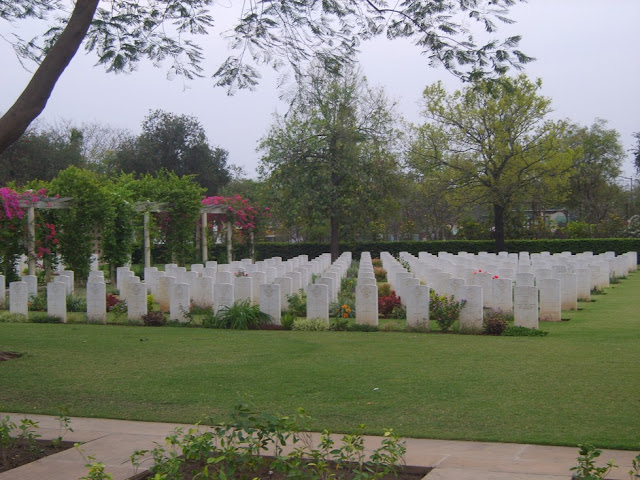
Delhi War Cemetery at Dhaula Kuan

Known Yet Unknown

Known Yet Unknown
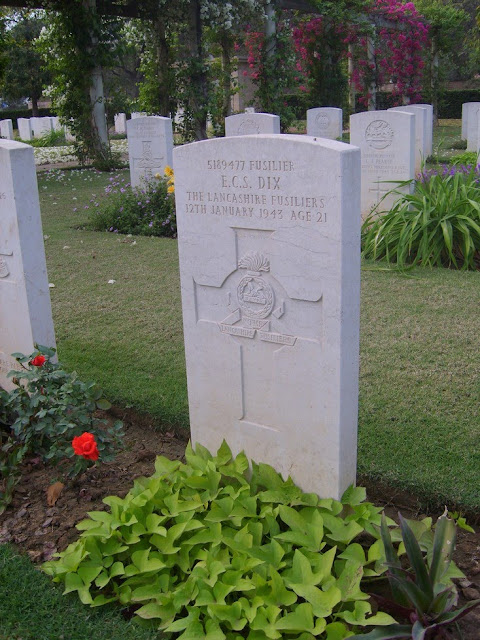
Gravestone of Fusilier E.C.S. Dix from the Delhi War Cemetery

Friday, June 26, 2020

COVID19 DAY 49-95 (26.6.2020)

COMPASSION IS THE CALL OF CORONA


Much water has flowed over more than the past one month. The worldwide toll taken by this “stubborn” virus is closing in on the half million mark while the numbers infected has gone past the nine million mark. Of course, optimists point out that more than half have recovered. After just under two-and-half months of lockdown the government opted to relax it rather than to risk an economic catastrophe in addition to the pandemic. But the dilly dallying continues as India has climbed to the fourth place in the total number of cases reported and is second only to the United States in the number of serious and critical cases. This number though for some reason has remained stationary at 8944 for well over the past week. There are regular changes in the number of new cases, deaths and recoveries but the number of serious and critical cases remain constant.
The question arises as to whether statistics are important at all or are they merely numbers that bear little relation to the reality. One is reminded of the stratagem adopted by the dispensation under Napoleon the pig in George Orwell’s satire on the Soviet Union ‘Animal Farm’. Just to give an outward show of well-being, grain bins were filled mostly with pebbles and then topped up with corn to make it appear as if there was no food shortage. I wish authorities take statistics more seriously particularly in the time of a pandemic when numbers are of paramount importance. That is perhaps the reason why many high-ranking government officials have come down with Covid19 since neither statistics nor contact tracing has been taken seriously enough. Experts have said again and again that the only way to bring the pandemic under control is to follow the virus. And if information about people who are getting infected is swept under the carpet, the virus gets the upper hand no matter how good it looks for us now.
However, looking at the past weeks and months what has struck me most is the lack of compassion in people at all levels. The attitudes of many leaders is utterly insensitive and shows complete disregard for human life. The American president, for example, has no qualms about saying that he would consider it a success if 80,000 people should die. It does not strike him that it is a failure even if one death takes place. (The toll is now over 126,000, seemingly leaving the president’s dreams in tatters!! What an exhibition of inhumanity). The Brazilian president describes this deadly infection as just a little cold. Is he out of his mind? At one million, Brazil now has the second highest number of positive cases in the world just behind the US. More than 53,000 Brazilians have already lost their lives to this “little cold”. True, for most it is just a little cold but for some it is fatal. Many leaders in their eagerness to appear realistic and practical have floated the idea people acquiring herd immunity. Maybe they are trying to cover their poor response stemming from the lack of a sense of urgency. Do they even know what this might mean in terms of loss of lives, pain, loneliness and loss of jobs and livelihoods and economies and livelihoods destroyed? Urgent action to save lives does not even figure in their agenda. Clinging on to power seems to be their single-minded pursuit. Rest is just “collateral damage.” For they seem to be sure, mistakenly though, that the virus will leave them alone.  
Over the ages India has been showing the beacon of compassion to the world beginning with Buddha. Compassion stems from the belief here that everything is a part of the Brahma whether it is man, animals, plants or inanimate objects. I recently learnt of a story of compassion about Sri Sarada Devi, known among her disciples as the Holy Mother, the wife of mystic sage Ramkrishna Paramahansa Dev – the man who was called Master by Swami Vivekananda and worshipped by many disciples. Sarada Devi, who outlived her husband by 34 years, belonged to Jayrambati in Bankura district of Bengal and lived there after the death of Sri Ramkrishna – an extraordinary being whose greatness was underlined by his simplicity and humility. Humility and simplicity also marked the life of Sri Sarada Devi who was a very kind hearted person who tried to help people in need without asking their caste and creed – the very essence of compassion. The incidents that I am going to relate are about Sri Sarada Devi bring out these very characteristics in her and should act as a guide and precept for all, whether they are powerful or powerless, wealthy or poor, particularly at a time when we are in the presence of a virus, sometimes deadly, that is totally non-discriminating. She was no revolutionary but she was supremely compassionate.
Shiromanipur was a village neighbouring Jayrambati. Its population was predominantly Muslim who traditionally were silk cultivators. Though India had been a major producer of silk for centuries, it had fallen on bad times due to stiff competition from China and Japan. This also affected sericulture (called ‘toont’ in Bengali) in villages like Shiromanipur which impoverished the cultivators. As a result, many of them had turned into thieves and highwaymen known as dacoits. But surprisingly many of inhabitants of Shiromanipur including those who indulged in thievery and dacoity held Sri Sarada Devi in high esteem and devotion since she appreciated their predicament and did not adopt a holier than though attitude. She not only treated them with great affection and love but also made sure that whenever they came to her house, they did not return to their village on empty stomachs. In addition, she plied them with many gifts of food and other stuff. Knowing the hard times that the Shiromanipur Muslims had fallen upon, she insisted on employing them to build her new house in 1914-15, dismissing fears expressed by many villagers including her own relatives.
Amjad was one such silk farmer turned dacoit who would visit Sri Sarada Devi often at times carrying vegetables for her grown in his patch of land. ‘Toonte dakat’ was his notorious nickname. One day he brought a hand of bananas as an offering for the temple that Sri Sarada Devi happily accepted, overruling the objection of a woman devotee asked why should the offering of a bad man be accepted. But despite knowing of his devotion, Sri Sarada Devi never tried to reform Amjad into a pious man as usually happens in many stories. He continued with his ‘badman’ ways though it must be said in his defence that he never molested Jayrambati, perhaps out of regard for the Holy Mother. She refused to condemn him to the nether worlds just because he was a dacoit. Once when he showed up after a long interval, Amjad explained that he could not come for some days as he had been rounded up for cattle rustling. Sri Sarada Devi accepted this in a matter of fact way, only replying that she was wondering why he hadn’t turned up for such a long time and now she understood why. When she was told some years later in Calcutta (now Kolkata) that he had been arrested by the police for dacoity, her only reaction was: “Oh, and I thought that at least he knew all about dacoity.” She even looked after his wife Motijan Bibi and his mother Fatema Bibi when Amjad was in lockup. Incidentally, Amjad succumbed to a sword wound he suffered during a dacoity raid sometime after the death of the Holy Mother. It takes a liberated soul like her to accept human beings for their intrinsic worth rather than sermonising to them.
No wonder other Muslim inhabitants of Shiromanipur held her in high esteem and some even considered her to be a Pir or Dervish as was recalled many years later by Roshan Ali Khan, who too was a resident of Shiromanipur, in an interview in 1993 to Prof. Taritkumar Bandopadhyay. (Shree Shree Mayer Padaprante, Udbodhan Karyalaya, Kolkata,2001, p. 657-661). remembered the kind and compassionate ways of Sri Sarada Devi when he met her a number of times in the company of his uncles Mafeti Sheikh and Hamedi Sheikh. Roshan Ali also related a mystic vision of the Holy Mother that Mafeti Chacha experienced. Mafeti Sheikh had gone to Sri Sarada Devi’s house to gift to her some vegetables grown in his garden. She was in prayer and so he decided to wait. As he waited in a corner of the veranda of her hut and watched her at the prayers, it seemed to him as if the Holy Mother was levitating a few feet above the prayer mat. As soon as he called out to others to see the miracle, the vision was no longer there. “She was no ordinary mortal – she must have been a pir or a dervish.”
True Sri Sarada Devi was no ordinary mortal. In addition to being compassionate she was courageous and never hesitated to act in accordance with her conviction. If what is recounted here looks like it showed her compassion only towards Muslims only, that is by no means true. She was compassionate no matter what the faith. When Swami Vivekananda fired a Hindu cook for pilfering stuff from the kitchen, the Holy Mother saw to it that the man got the job back as she knew that he was a poor man with many mouths to feed and no other means of making a living.

Monday, May 11, 2020

COVID19 DAY 39-48 (11.05.2020)


BUDDHA AND THE INWARD LOOK


The number of Corona cases worldwide is close to the four-million mark. Life in our city, which happens to be in a ‘red’ no-go zone, is at a virtual standstill though people can go out to buy vegetables, milk, meat and, if one is lucky, a bottle or two of the ‘tissue restoring’ stuff. In the meantime, the lockdown continues and peace reigns. By and large, this is due to much reduced traffic and the absence of planes which in normal times shatter the silence every few minutes. As a result of this when I sit near the window, I can hear the calls of at least a dozen different kinds of birds, most of whom I rarely paid any attention to. I can recognize the sounds of the bulbul and the parrots among them. Then there are the usual flock of seven sisters bringing the ceiling down and of course, the koel with its mellifluent song. The ubiquitous crow and pigeons we all take for granted while the noisy squirrels prance about chasing each other or squeaking in alarm when a cat is around. Across the road is a rooster that crows regardless of the time of the day. Perhaps it is not aware that its duty is in the morning, though this allotment has been made by humans. There is also a black brahmin bull that seems to hold discourses in the shade of a tree with several devoted dogs in attendance who sit quietly.  

Plants and trees are not to be left behind. Many gulmohar trees nearby carry a canopy of flaming red flowers. I am not surprised that in many parts of the world this flower, native to Madagascar (so says the ever-helpful Wikipedia), is known as the flame of the forest. As the leaves of other trees sway in the breeze and catch the sunlight, they display various shades of green. Nature in full flow and most of us miss it most of the times, busy as we are doing god only knows what and rushing about hither and thither, getting stuck in traffic jams, eating breakfast in the car, cursing other commuters, meeting mythical targets and making a nuisance of ourselves in general. Apart from what we do to others we ill-treat our bodies giving it blood pressure, diabetes and heart problems. I suppose the lockdown has forced on us the realisation that life can be enjoyed to the full if we are relaxed and at peace with ourselves.

Talking of peace, Thursday was Buddha Purnima (full moon), not just the day of Gautam Buddha’s birth but also the day of his Mahaparinirvana. Therefore, in the evening on that day a beautiful reddish yellow moon rose from the horizon into the sky which I watched. The sight was unusual because of the clear pollution-free skies but what I missed was a landscape bathed in moonlight, one of the most soothing views. This was because of the excessive streetlights that have become the norm these days to maintain security. Returning the topic of Buddha, the most important thing that I can think of is that I live in a district named after him – Gautambudhnagar. Though a bit long, it sounds much better than NOIDA, an acronym for New Okhla Industrial Development Authority set up more than three decades back. A wonderful giant statue of the Buddha adorns the entry to the town though it is almost universally ignored.

I have, however to confess that my eyes were opened to the greatness of this great founder of an atheist religion not in this city but in Ajanta, about 100 kilometres from the Maharashtra city of Aurangabad. I had often heard of the Ajanta caves and the Elora rock cut Kailasa temple. But it was Ajanta that I became really aware of the greatness of Gautam Buddha who began to spread the message of peace five hundred years before Jesus Christ. The frescoes and sculptures in the caves of Ajanta are simply marvellous. The peace that they exude has to be seen to be believed. It is believed that some of these caves were excavated in the second century B.C. and the rest in the fifth and sixth centuries A.D. The peace exuding from these unsigned works of art made two things evident to me – first that they were inspired by the Buddha who lived between 300 to 1000 years before the artists and second, the great humility that is their hallmark. This seems to be extraordinary in our world today when the artist is greater than his work of art!!
Painting from Ajanta, Cave 1, Bodhisatva Padmapani 
and the inward look
 (By Unknown author - Hugh Honour y John Fleming: Historia mundial del arte, Ed. Akal, Madrid, 2002, ISBN 84-460-2092-0, Public Domain) https://commons.wikimedia.org/w/index.php?curid=12052163


Reverence for the Buddha grew in me after this experience but I was filled in with much more intricate details by photographer and art connoisseur Benoy K. Behl. Behl is remarkable not just because he developed a technique of photography in low light but also because he has managed to imbibe the philosophy of Indian art as well as its techniques. It was no accident that I was thus moved by the art in these caves located in the gorge of the Vaghora river which he called an enchanted place. According to Behl, the Ajanta paintings are the fountainhead of Buddhist painting around the world. In his lectures around the world at which he showed these paintings, Behl found that art historians and critics were of the unanimous view that “this must surely be the finest art of mankind… not just of the fifth century but all the art of the renaissance, impressionists, expressionists and modern art.” He says that in the vision of life in these paintings is the “same that is in you and me and in all the animas, the birds, the insects, the flowers, the leaves…” This vision sees a great unity in the whole of creation and this imparted a great sense of compassion to every line which the painter made.

The art of Ajanta is no longer viewed around the world as a flash in the pan as it was earlier but was part of a continuous tradition of art that continued for many centuries afterwards. The philosophy of aesthetics in ancient India was very highly developed in which it was understood that the when one looked on something beautiful, like the paintings of Ajanta, the experience was that of “brahmananda itself. The ecstasy of salvation itself… for in that moment the veils of the illusion of the material world or maya or mithya are believed to be lifted and you are seeing the grace which underlies all that there is.” That is the reason why art has played a fundamental and very important role in the philosophic life of India.
The COVID19 virus has brought the worst and best in humans throughout the world. But those in power should remember that compassion and sympathy are much more important in the battle to conquer fear, pain and misery.

Friday, May 1, 2020

COVID19 DAY 22-38 (30.4.2020)


AN ERA IS PASSING


Covid19 is not showing too many signs of abating as the worldwide toll crossed three million positive cases. American President Donald Trump was true to his reality tv star status with the help of histrionics that has spawned a plethora of comedy shows. The USA, in the meantime continues to occupy the leading spot (if that is any comfort) in the total number of cases as well as deaths from the virus. India by the way is slowly creeping up on the US and has climbed from position 22 to position 16 on the worldometer chart. The number of cases has trebled over 15 days from 11,555 on April 15 to 35,000 on May 1.

Covid19 pandemic has somehow come to resemble the Mahabharat story of Arjun’s son Abhimanyu who knew how to enter the battle ‘chakravyuh’ or maze but had no idea of how to get out. Lockdown appeared to be an attractive idea in the beginning but most are finding it very hard to design a way of coming out of it unscathed. It might be all right on the one hand as humourist P.G. Woodhouse use to say in his stories about uncertain situations. On the other hand, things may simply spin out of control if the exit is made too early and the biggest irony is that nobody knows when is the right time or when is too early.

However, as the pandemic rages an era seems to be slowly passing out in India with the deaths of stars from an earlier era. Chuni Goswami, captain of the Indian football team that won the Asian Games gold medal in 1962 defeating South Korea 2-1 (can you believe it?) died at age 82. The handsome quicksilver forward was a hero of our times. Now one newspaper has reported in a headline that former cricket captain Sourav Ganguly has mourned the death of Subimal Goswami (not Chuni Goswami - I can’t believe it. Its like referring to Pele as Edson Arantes do Nascimento). Goswami’s team-mate P.K. Banerjee too died last month. Just shows that old times are passing.

Another star that passed away was Rishi Kapoor who launched the ‘Rajdoot GTS’ mini bike (175 cc) in his hugely popular film ‘Bobby’ in 1973 alongside the beautiful Dimple Kapadia. The only problem was that this mini bike was given the sound of a Harley-Davidson in the film soundtrack. The ‘Rajdoot GTS’ has become a dinosaur though Kapoor and Kapadia had continued their film careers in character roles. That was indeed a different era that few in this post liberalisation time can imagine. For youngsters (and I was one at that time) there was a very limited variety of motorbikes available. One was the 'Rajdoot' manufactured by Escorts, better known for manufacturing tractors. The other was Czech 250 cc Jawa which later came to be called Yezdi. These were pushed out of the market by the more fuel efficient and lighter Japanese bikes. The only other two-wheeler available was the Bajaj (earlier Vespa which has made a comeback recently). The choice of automobiles too was limited to three brands - good old Ambassador that evolved from the British car Morris and FIAT, an Italian car assembled and later manufactured in India as Premier, and Standard. The latter had a variant in Standard Herald that was modified Triumph two door sporty model. The liberalisation and entry of many Japanese, Korean and American brands of automobiles drove the cars out of the market too. So really, an era passes.

In ‘Bobby’ Rishi Kapoor also popularised the long woollen scarf that resembled the scarf worn by Vanessa Redgrave in the 1968 film ‘Isadora’. The film was based on the life of an American dancer who died after her scarf got entangled in the wheels of the automobile in which she was travelling. Of course, nothing of the kind happened to Raja, the role played by Rishi Kapoor. Another star to die was Irrfan Khan who however belonged to an intermediate era but will be missed by all.

Sad times.

Wednesday, April 15, 2020

COVID19 DAY 16-21 (14.4.2020)


A SHOCK FOR MASS SOCIETY


On the 21st day of the lockdown, the prime minister announced that it would be extended till May. Rumours fuelled uncertainties as many had expected the lockdown to be lifted substantially on April 15. Looking at the situation, it was a pre-eminently sensible decision. The number testing positive has crossed the half million mark in the United States with deaths rising to 26,000. Worldwide this virus has claimed more than 125,000 lives and has infected more than two million. By and large lockdowns are being continued around the world.

As the pandemic rages it has come as a big blow to mass society said to have been born with the French Revolution of 1789. Most affected are three categories of people whose careers are tied up closely with mass society – sportsmen, entertainers and politicians. Though newspapers have reduced the number of pages in cost cutting efforts, the sports page has shrunk to just one side. The Olympic extravaganza has been put off, not only severely depriving sportsmen of competition, but media of content of all kinds. It appears as if it will definitely be some years before we go back to stadiums to watch big ticket games.

But sportsmen are not the only ones to be affected. The entertainment industry is in shambles since all cinema theatres are shut and social distancing means that shooting of films and serials are off. If and when it resumes, it cannot be said whether the heroes and heroines will appear in masks in the future. We’ve already had masked comic characters like ‘The Phantom’ or ‘Batman’ but the imagination stretches to the limit at the thought of masked protagonist. Akshay Kumar is appear to be no different from Shahrukh Khan. We may be able to make out Anupam Kher due to his bald pate but we will miss out on the most important element of acting – expressions while dialogues will be muffled at best. In any case, most films will look like the Wild West Hollywood movies with masked gunmen or Bollywood dacoit films of the ‘60s and ‘70s in which people like Sunil Dutt made their careers. The advertising industry too has to look for new ways of promoting products instead of riding on well known faces from sports or entertainment. They will also have to figure out new ways of brand building.  

But it seems the worst affected are politicians who are at their wits end to find ways of keeping in the public mind. Of course, our prime minister can always give ‘messages’ on television to the people. But he has to be careful not to repeat it too often as it will lose its novelty. The American president carries out daily briefings for the press and gets upset when news channels threaten not to carry them live. For him this is the crucial election year and there is no other way of campaigning other than these briefings as thousands of Americans have already lost their lives. Mr. Trump bashes the media people as he can’t get his hands on his opponents at debates and campaign speeches. And the only way in which he can stay in the limelight is to make outrageous statements because he knows very little about the COVID19 virus. The Indian National Congress has of course come up with the wonderful idea of online daily online briefings which not only save money but also enable them to showcase regional leaders.

Let us see what the future upholds for these unfortunate people.

Thursday, April 9, 2020

COVID19 DAY 15 (8.4.2020)


THE SMILING ELEPHANT

The Novel Corona Virus is not an accident or a conspiracy sprung to destroy countries. It is typical of human nature to look for a scapegoat when trouble looms over our head. As indiscriminate charges fly about, the death and destruction caused by the virus only mounts, adding to our miseries. Our food habits too have changed considerably as now most of our non-vegetarian demands are met with the help of large-scale animal farming. It is believed that it is here that the transmission of the virus from the wild to humans have occurred through the intermediary of the animals that are grown specially for the table in farms.

The last few scenes of the 2011 film ‘Contagion’ are significant. They show how exactly the virus travelled from the wild to the human. The starting point was the bat that was eating a banana at a plantation and accidentally dropped a bit that was consumed by a pig that was being grown for the table. That is how it was transmitted to a human. However, the last scene is particularly disturbing as it shows the destruction of palm trees where bats live to get rid of the source of dangerous viruses. Bats would not have entered into our food cycle but for the destruction of their habitats and food sources. The message is that nature will have to be destroyed to ensure our protection from, among other things, pathogens.

But this may not be necessary if we learn to respect and live with nature which is as essential for our survival as vaccines that protect us from pathogens. In our race for industrial development and search for minerals we destroy forests, the habitat of a large part of nature (including ourselves). This has not been the human approach through history, specially in India. Here nature was looked upon as a harmonious whole consisting of animals, plants, man and even so-called inanimate objects. That is why even animals were endowed with emotions just like man as is depicted in the ‘Smiling Elephant’ as it appears in a drawing at Amber Palace, near Jaipur. The picture of this drawing was taken by Benoy K. Behl in 2001. “The smile on the face of the elephant and the twinkle in his eye are remarkable!” says Behl. 

'The Smiling Elephant' at Amber Palace, Jaipur. (photo by Benoy k. Behl


“This is a most difficult time that the world is passing through. However, we do have a choice to use it to look at ourselves, rethink our lives, take care of all that is around us and to reshape a better future for this planet.  We will have achieved something positive and learnt something very important even in the midst of our crisis. We are very fortunate to have a heritage of a great philosophy, which has always taught us universal love and the interconnection of all creation, including us, animals, the trees and rivers,” Behl adds.

Tuesday, April 7, 2020

COVID19 DAY 14 (7.4.2020)


ELABORATING DR. BRILLIANT


I must point out the Dr. Brilliant’s interview was carried by the American news journal ‘Wired’ and taken on phone by Steven Levy on March 19, 2020. A condensed version was reproduced on the website of ‘Seva-Canada’.( https://www.seva.ca/news/doctor-who-helped-defeat-smallpox-explains-whats-coming ).Seva is an organisation that Dr. Brilliant helped form and which helps in fighting pandemics.

There are a couple of points that he made in the interview that needs to be highlighted so that we can make an informed guess about how long this atmosphere of uncertainty lasts and the world finds its feet. The first is on whether lockdown by itself can end the pandemic. Dr. Brilliant’s answer is ‘no’. The lockdown will spread out the disease over time. “By slowing it down or flattening it, we're not going to decrease the total number of cases, we're going to postpone many cases, until we get a vaccine—which we will, because there's nothing in the virology that makes me frightened that we won’t get a vaccine in 12 to 18 months,"feels Dr. Brilliant. Eventually the human species is going to get "herd immunity"from a combination of two two things - a large enough number of people get it and develop immunity and second, the development of a vaccine. So, the time frame at which he is looking is between a year and a year-and-a-half for things to begin to normalise. He sums up the situation with a metaphor, "If this were a tennis match, I would say advantage virus right now." So there has to be increased testing and early detection and early response to eliminate the virus completely.  
The second point that he makes is the potential damage due to the irresponsible comments by the American President. “But did we get good advice from the president of the United States for the first 12 weeks? No. All we got were lies. Saying it’s fake, by saying this is a Democratic hoax. There are still people today who believe that, to their detriment. Speaking as a public health person, this is the most irresponsible act of an elected official that I've ever witnessed in my lifetime." But he holds out hope, particularly for Americans that they have a man like Dr. Antonio Fauci, head of the National Institute of Allergy and Communicable Diseases, in-charge of matters. 

COVID19 DAY12&13 (6.4.2020)


“I AM THE LUCKIEST MAN…I SAW THE LAST CASE OF SMALL POX

These were the words of American epidemiologist Dr. Lawrence Brilliant, who I mentioned in my last entry. He was in the World Health Organisation (WHO) team that ended the career of deadly small pox in India and also Bangladesh. Rahima Banu was the name of the last victim. Dr. Brilliant is now 75 but luckily for us he is still actively giving advice on the current pandemic, bringing to bear on it his vast experience. Much as we need doctors, we also need the experience of people who have dealt with such diseases in the past. So many people died in the tsunami that struck India in 2004 because no living person had a memory of it and therefore people were unable to gauge the danger. 


Dr. Larry Brilliant and his wife Girija


Dr. Brilliant, like many other members of that WHO team including Indians, is quite an offbeat doctor if one can call him that. After his internship he came to India, like many of his back-pack contemporary looking for spiritual upliftment. Dr. Brilliant’s journey, along with his wife Girija, has been unusual and he did get the spiritual upliftment that he was seeking. In this quest, he met Neem Karoli Baba and stayed at his Ashram at Kainchi Dham near Nainital for some time. The Baba, a devotee of Lord Hanuman, changed Brilliant’s life forever when he asked him to shed his kurta and pyjama and put on a three-piece suit and work in the WHO. The Doctor, the Baba predicted would end the scourge of small pox from India. Many credited the Baba with supernatural powers but this prediction of his came true.

Dr. Brilliant has settled in the up-market Bay Area of Los Angeles, USA with his wife and three children. Though he never adopted an ascetic life and lives in luxury, he continues his love affair with India and other Asian and African nations helping them out of their difficulties in health care. It seems that the good doctor has been endowed with powers of future forecasting, probably a blessing from his Guru who died in 1973. About 14 years back he had spoken of just such an epidemic as the world is witnessing today. He was speaking at a TED talk in 2006, Dr. Brilliant said many epidemiologists feared the outbreak of a virus epidemic that could infect a billion people worldwide and result in 165 million deaths. He had said that it would be like nothing like what people had seen till then. “There will be no airplanes flying,” was his ominous forecast and the US economy would lose one to three trillion dollars and the “consequences will be unthinkable.” A group of top epidemiologists he had spoken to had felt that it would occur within the next generation or the one after that. Dr. Brilliant was also the chief technical advisor of the 2011 film ‘Contagion’ that has suddenly become very popular again. It seems he was pretty accurate and the unthinkable has happened.

What does Dr. Brilliant have to say now? Well, he revealed that at least the United States has not just walked into the epidemic with its eyes open but the administration has even worked to dismantle the team that had been part of the National Security Council. And this had been happening for the past couple of years. The Washington Post reported in May, 2018 that the top White House official responsible for leading the US response in the event of a deadly pandemic had left the administration and the global health security team he headed had been disbanded by National Security Advisor John Bolton, a Trump supporter. The man who headed the team was retired Rear Admiral Timothy Ziemer. “I mean Trump pushed out the admiral… And then Trump removed the (early warning) funding for countries all around the world.”
“That there is no human being in the world that has immunity as a result of having had it before. That means it’s capable of infecting 7.8 billion of our brothers and sisters … But there's going to be tens of millions of us or hundreds of millions of us or more who will get this virus before it's all over, and with large numbers like that, almost anything where you ask “Does this happen?” can happen.” See what you can make of it.

Church at Gol Dak Khana

Church at Gol Dak Khana
serenity amid change