Discipline in Death

Discipline in Death
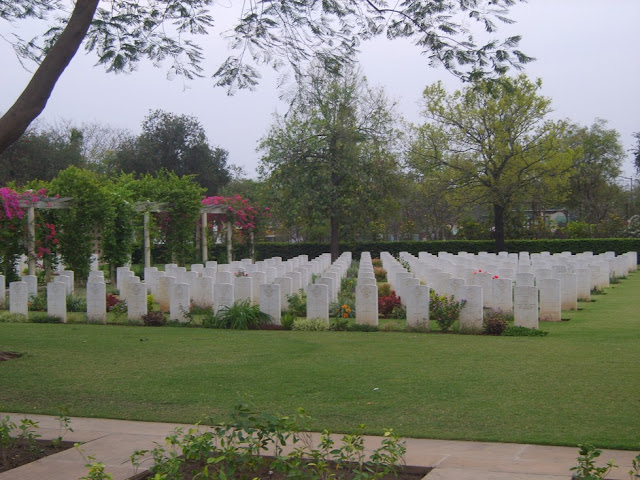
Delhi War Cemetery at Dhaula Kuan

Known Yet Unknown

Known Yet Unknown
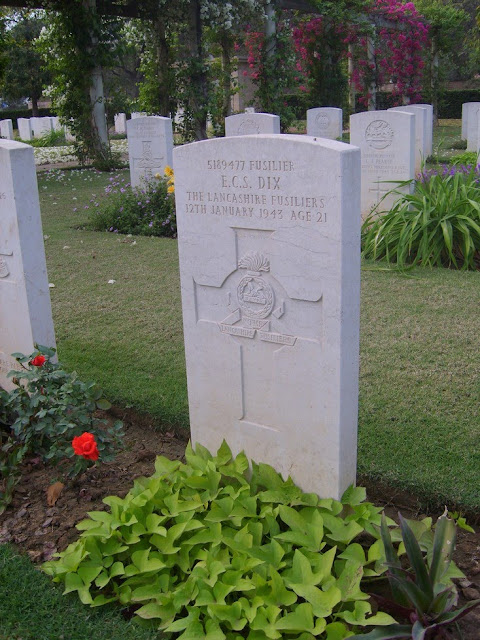
Gravestone of Fusilier E.C.S. Dix from the Delhi War Cemetery
Showing posts with label ecs dix. Show all posts

Wednesday, January 4, 2023

BANARASI TOMATO ‘CHAT' AND 'ESPRESSO MALAIYO’

What do you think about Kashi?

IF 
you think Banaras is only about the journey to the other world and things spiritual, you are way off the mark. It offers its fair share of goodies for the pleasures of this world too particularly gastronomical delights for those more materialistically inclined. This venerable city serves a variety of mouth-watering street food prepared with great care and expertise to meet every taste. It has something for those who like it hot and spicy as well as those with a sweet tooth. 

                                                                    
Nai Sarak


While tour guides of Varanasi are apologetic about the rather untidy nature of their city, particularly with respect to European and American tourists, the fact is that the real charm of the ‘centre of the world’ lies in its crowded alleyways that lead to from the main streets above to the ghats on the banks of the Ganga below. Some may find the going ‘dirty’ in the narrow lanes but these are the very lanes and by-lanes around which the culinary delights of Banaras are available. 
Tomato Chats Served Hot & Spicy
                                                                      

Out of all the foods available on the colourful streets of Banaras, four stand out and must-try-out for every visitor. I will relate them in the order of my preference. The first place goes without hesitation to ‘tomato chat’. It is available at ‘Deena Chat Bhandar’ on ‘Nai Sarak’ or the new street of this oldest of the world’s cities. The chat is a mixture of a number of vegetable ingredients the dominant among which is the American fruit called tomato. The sting is provided by fine


'Espresso Malaiyo'


ly chopped green chillies. It is served on a plate of leaves sown together with twigs. 


The second is a milk espresso snack called ‘malaiyo’ which is flavoured and sweetened milk worked up into a thick froth with a light-yellow colour, filled to the brim of an earthen tumbler. It resembles the better-known candyfloss. The third delicacy is the ‘lal peda’ a delicious sweet meat that can be purchased at Rajshree Sweets in the cantonment area. 

The last (not by any means the fourth) is the Banarasi Paan, or green betel leaf rolled up into a triangular shape and available virtually anywhere in the city. The best, in my opinion, is the ‘saada’ or plain one, not the sweet paan as the real flavour of the leaf can be tasted only in a plain paan. A paste of red kattha (catechu powder) and chopped betel nut is applied on the leaf before it is rolled up and stuffed into the mouth whole. The combination leaves a characteristic red colour on the inside of the mouth and red pan stains in corners of stair cases and on walls is a ubiquitous sight everywhere in India. The real Banarasi paan just melts in the mouth leaving no fibrous remnants.
Friday, February 12, 2010

Chindits, the Burma campaign and war memorials

Delhi's layout has been steadily changing over the years. What used to be a huge roundabout at Dhaula Kuan has now changed into a complicated maze of flyovers that takes one to various destinations like Gurgaon, the airport, Delhi's cantonment, R.K. Puram, Motibagh and Naraina, among others. If you manage to find your way out of this maze towards Naraina on Ring Road (or Mahatma Gandhi Road), after about a kilometre there is an U-turn. A traffic junction at this place, known as Gopinath Bazar, has now been replaced by the U-turn to smoothen out traffic movement. If you take the first turn on the left soon after the U-turn you wil reach a railway level crossing. About a kilometre further on is the Delhi War Cemetery, which is a memorial of British soldiers and officers killed in the two World Wars. Next to it is a civilian cemetery of the British as well. This War Cemetery turned out to be a bit of a surprise for me ... I have lived in and around Delhi for more than three decades. It is one of the cemeteries maintained across the world by the Commonwealth War Graves Commission (earlier known as the Imperial War Graves Commission). This is a body that had among its founders British author Rudyard Kipling (whose son died in the First World War). Kipling was also the originator the the term 'White man's burden' that was the expression of the West's mission to 'civilise' the Orient. But of the cruelty of war he also wrote: “The flesh we had nursed from the first in all cleanness was given… To be blanched or gay painted by fumes- to be cindered by fires- To be senselessly tossed and retossed in stale mutilation From crater to crater. For this we shall take expiation. But who shall return us our children?” Anyway, I visited this cemetery some months back. Outside it some boys play cricket with a tennis ball.. but inside it is calm. The lawns are well maintained. But the heart wrenches when you read the marble gravestones and find that many of the soldiers died at the tender age of 21 or 22 years. The photo that accompanying this post is that of a gravestone on which the name inscribed is 'E.C.S. Dix, Lancashire Fusliers. Right at the top is his service number - 5189477 while his date of death is given as 12th Januray, 1943, aged just 21 years. Some research on the internet reveals that his full name is Eugene Charles Samuel and that he belonged to the 10th battalion of the Lancashire Fusiliers that saw action in the Burma campaign or what has came to be called the Chindits. I also found an account of parts of the campaign written by William (Bill) Dalton, a lance corporal also of the 10th Battalion. Dalton was wounded in machine gun fire on 9th January, 1943, just three days before Fusilier Dix was killed. I have given the link to Dalton's account. Bill Dalton, by the way, survived the war and died only last year at the age of 93 at his home village of Croston near Chorley in Lancashire (county) in the U.K. But surely Eugene Dix deserves a little more attention - who was he? why did he join up? who were his parents? does he have any descendents living? Maybe a little more research will bring out the circumstances of his death.

Church at Gol Dak Khana

Church at Gol Dak Khana
serenity amid change